.png)
Phantom Grief
- Jun 6, 2022
- 5 min read
Updated: Oct 9, 2022

A few years ago, I somehow fell down a rabbit hole of medical content on YouTube and stumbled across a video wherein a physical therapist explained the concept of phantom pain. As far as I understand from that video and a few articles online, it is a clinical phenomenon wherein post-amputation patients feel pain coming from the part of their bodies that no longer exists. It is enthralling (and terrifying at the same time) how the miscommunication between the brain and spinal cord can beget such reactions. I mentioned this in passing to my friend in one of our stolen conversations between classes and she simply shrugged and replied: “That is bizarre. How can our bodies feel pain for something that does not exist?”. Somehow her question stuck with me. It slipped into my mind as I stirred my coffee in the morning, as I waited for the bus, as I idly doodled on my book during lectures. Is it true that our bodies can mourn the loss of something that no longer exists? If we do not remember the existence of something, can we truly feel the grief of losing it?

I was two when my father passed away. I can’t exactly recall any clear memories of him. I cannot remember his face, his voice, his smell, his mannerisms, not even the warmth of his embrace. All I knew about him was from my mom, my siblings, and even my neighbours. They would tell me how good of a man he was, how he loved me with all his heart, and how joy spread across his face like liquid sunlight every time he smiled. I could listen to those stories for hours on end, trying to piece together the fragments I had and conjuring up the kind of man my father was, the kind of man he would be. As a child, I used to collect all the trinkets related to my father and put them in an old cookie tin. A button on his old shirt. A photo of him as a child. A shopping list he hastily scribbled on a notepad. A birthday card from him. A pair of earrings he gave me on my first birthday. I collected these knick-knacks with the diligence of a museum curator, carefully placing each item in separate ziplock bags as if I were creating a time capsule. Back then, these items were my treasures, my little museum, my attempt to convince myself of his presence in my life.
When I was in middle school, I found the photobook from my dad’s funeral buried underneath a pile of my brother’s old school reports. The photos were arranged in chronological order, meticulously documenting every ritual of the funeral and every tear that was shed. Gingerly flipping through the pages, my fingers carefully traced each photo, trying to trudge through my hazy memory of that day. In one of the photos, I was sitting next to my father’s casket, my face scrunched up with pain and tears - the kind of expression that seemed so foreign on the innocent features of a two-year-old. I stared at that little girl intently, transfixed by that ghastly sight and intrigued by how awkward it was for the photographer to shove a camera in my face. Somehow that little girl’s agony felt so strange to me, like she was just another unfamiliar mirage of the past, like we did not share this very same fleshly cage. I tried to imagine how her little frame trembled with each sob, how her eyes slowly became swollen as tears raced down her chubby cheeks. Deep down I yearned to feel that agony, I wanted to cry uncontrollably over the death of my father, I longed for the kind of pain that demolished my heart and obliterated my soul. Instead, all I could feel was a sense of emptiness, as if I had been mourning the loss of somebody I did not even have, as if I had been feeling phantom grief.
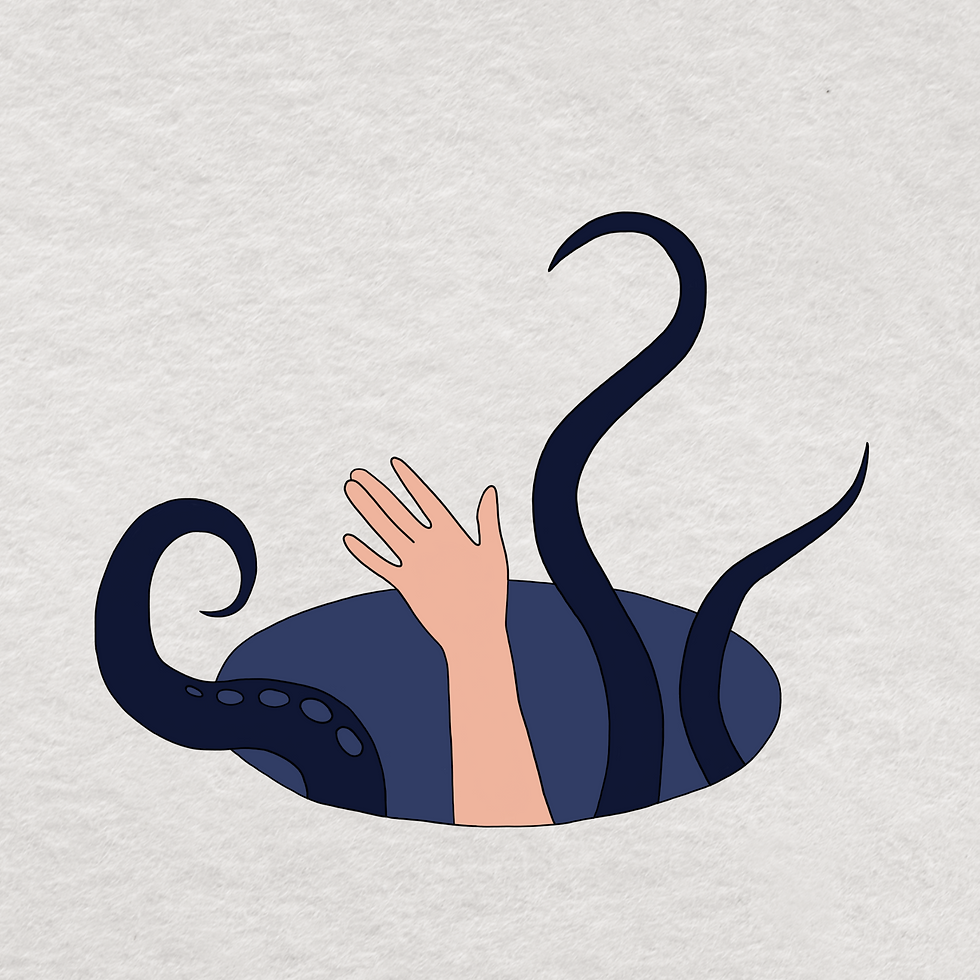
The cruel thing about loss is that it would always find a way to permeate into every crevice of your existence, to reach its tentacles into other parts of your life until your self-concept remains nothing but a horrid mess of tragedies. In my adolescent years, I was always known as the girl whose father died. That was my “thing”, my label, my identity. That was my life. By the time I reached grade 7, I had an arsenal full of death-related euphemisms. “He passed away.” “He left this world.” “He is in heaven.” Each expression was carefully crafted to alleviate the morbidity of the situation, to turn away from the truth. When people asked about my father, I would shrug and say that he had passed away, feigning indifference to make the situation less awkward. However, deep down, the grief that used to be invisible was now gnawing at my heart, clutching at my mind. As a teenager, losing my dad was such a focal point of my identity that I used to feel pressured to grieve in a certain way, as if there had been a “grieving girl” mould I must fit into. As I grew older (and hopefully a bit wiser), I started to understand the intricacies of grief. Just as each snowflake has its own unique pattern, each individual has their own way to go through the mourning process. To me, grief is an interwoven tapestry of human emotions and complexities. It bears many faces, and with each face, it inflicts a different kind of pain, a different sphere of suffering. Grief is the scalding tears streaming down my face when people called me “uneducated” since I was, to them, no more than a fatherless child. Grief is the jealousy as I watched my friends prepare gifts for Father’s Day. Grief is a never-ending journey in the dark, so long that I forget how to move, how to put one foot in front of the other.
For many years, I wondered how life would be if my father were still here. In an alternate universe, my dad would be the kind of man who would buy groceries on his way back from work. On each wedding anniversary, he would give mom flowers and gently peck her on the cheek as my siblings and I yelled out how gross they were. We would have movie night every Saturday and he would always fall asleep halfway through. I would wake him up at the end of the film and he would patiently listen as I clumsily summed up how the plot unfolded. As alluring as that vision may appear, I come to accept that this world is the only reality I have, and that I need to move on in this world without him. Over the years, I gradually learn to find solace in my grief. I savour the emptiness in my heart and understand that it comes from a place of having loved and been loved deeply. Losing my father at a young age has taught me the fragility of life, the fleeting nature of our earthly existence, and above all, the importance of cherishing the love that I am having now.




.png)
.png)


Comments